Modeling And Detection of Cracks in Earthenware Water Jugs Using Artificial Neural Networks and Image Processing Techniques
DOI:
https://doi.org/10.58190/ijamec.2025.147Keywords:
Automated inspection, Artificial Neural Networks, Crack detection, Image processing, Pottery classificationAbstract
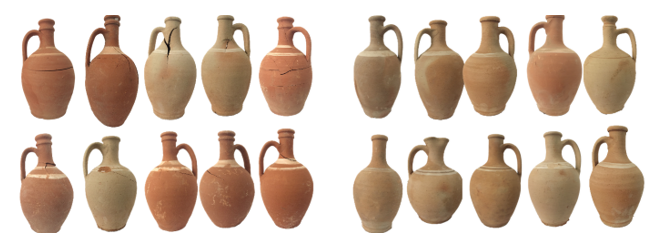
Quality control in traditional pottery production is a labor-intensive process that relies heavily on manual visual inspection to detect structural defects. To address this, the present study proposes an automated framework combining image processing techniques with Artificial Neural Networks (ANN) to detect and classify cracks in handmade earthenware jugs. Images acquired via smartphone were preprocessed using Otsu’s thresholding and median filtering to effectively isolate defect regions and suppress noise. A dataset of 189 samples was utilized to train and test the ANN model. The proposed model achieved a classification accuracy of 92.98%. Confusion matrix analysis confirmed robust performance, demonstrating high capability in distinguishing between intact and defective samples with no significant bias toward either class. This approach offers potential for modernizing pottery production, enhancing efficiency, and ensuring quality.
Downloads
References
[1] A. Sioma, “Vision System in Product Quality Control Systems,” Applied Sciences, vol. 13, no. 2, p. 751, Jan. 2023, doi: 10.3390/app13020751.
[2] T. Prabaharan, P. Periasamy, V. Mugendiran, and Ramanan, “Studies on application of image processing in various fields: An overview,” IOP Conf. Ser.: Mater. Sci. Eng., vol. 961, p. 012006, Nov. 2020, doi: 10.1088/1757-899X/961/1/012006.
[3] Y. Chen, Y. Ding, F. Zhao, E. Zhang, Z. Wu, and L. Shao, “Surface Defect Detection Methods for Industrial Products: A Review,” Applied Sciences, vol. 11, no. 16, p. 7657, Aug. 2021, doi: 10.3390/app11167657.
[4] M. Raisul Islam et al., “Deep Learning and Computer Vision Techniques for Enhanced Quality Control in Manufacturing Processes,” IEEE Access, vol. 12, pp. 121449–121479, 2024, doi: 10.1109/ACCESS.2024.3453664.
[5] S. A. Singh and K. A. Desai, “Automated surface defect detection framework using machine vision and convolutional neural networks,” J Intell Manuf, vol. 34, no. 4, pp. 1995–2011, Apr. 2023, doi: 10.1007/s10845-021-01878-w.
[6] B. Akarsu, M. Karaköse, K. Parlak, E. Akin, and A. Sarimaden, “A Fast and Adaptive Road Defect Detection Approach Using Computer Vision with Real Time Implementation,” International Journal of Applied Mathematics, Electronics and Computers, pp. 290–290, Dec. 2016, doi: 10.18100/ijamec.270546.
[7] M. Karaköse, E. Akın, and O. Yaman, “A Fault Diagnosis Approach for Rail Surface Anomalies Using FPGA in Railways,” ijamec, vol. 1, no. SpecialIssue, pp. 42–46, Aug. 2017, doi: 10.18100/ijamec.2017SpecialIssue30469.
[8] S. B. Çelebi, A. Aslan, and M. Canpolat, “Predicting Gelation in Copolymers Using Deep Learning Through a Comparative Study of ANN, CNN, and LSTM Models with SHAP Explainability,” in Database Engineered Applications, vol. 15928, G. Bergami, P. Ezhilchelvan, Y. Manolopoulos, S. Ilarri, J. Bernardino, C. K. Leung, and P. Z. Revesz, Eds., in Lecture Notes in Computer Science, vol. 15928. , Cham: Springer Nature Switzerland, 2026, pp. 85–95. doi: 10.1007/978-3-032-06744-9_7.
[9] M. E. Sönmez, K. Sabancı, and N. Aydın, “Classification of Wheat Rootstock and Their Hybrids According to Color Features by Machine Learning Algorithms,” International Journal of Applied Mathematics Electronics and Computers, vol. 10, no. 2, pp. 39–48, June 2022, doi: 10.18100/ijamec.1098276.
[10] D. Wang et al., “Comparison of Risk of Silicosis in Metal Mines and Pottery Factories,” Chest, vol. 158, no. 3, pp. 1050–1059, Sept. 2020, doi: 10.1016/j.chest.2020.03.054.
[11] I. Lazaridis et al., “Ancient DNA from Mesopotamia suggests distinct Pre-Pottery and Pottery Neolithic migrations into Anatolia,” Science, vol. 377, no. 6609, pp. 982–987, Aug. 2022, doi: 10.1126/science.abq0762.
[12] S. Karacaoğlu, “A Comprehensive Outlook of Culture, Creativity and Sustainability in Rural Areas Through Tourism Development,” in Niche Tourism and Sustainability, A. Farmaki, P. Singh, and V. Hassan, Eds., GB: CABI, 2024, pp. 94–104. doi: 10.1079/9781800626669.0008.
[13] M. Yada, G. Tanaka, K. Isono, N. Kamochi, and H. Ichinose, “Ultra-reduction of drying and firing shrinkage on pottery slip casting by adding mullite fiber,” Journal of the European Ceramic Society, vol. 44, no. 4, pp. 2677–2684, Apr. 2024, doi: 10.1016/j.jeurceramsoc.2023.11.012.
[14] S. B. Çelebi and B. G. Emiroğlu, “Leveraging Deep Learning for Enhanced Detection of Alzheimer’s Disease Through Morphometric Analysis of Brain Images,” TS, vol. 40, no. 4, pp. 1355–1365, Aug. 2023, doi: 10.18280/ts.400405.
[15] O. Yaman and M. Karakose, “Development of image processing based methods using augmented reality in higher education,” in 2016 15th International Conference on Information Technology Based Higher Education and Training (ITHET), Istanbul, Turkey: IEEE, Sept. 2016, pp. 1–5. doi: 10.1109/ITHET.2016.7760723.
[16] K. Palanikumar, E. Natarajan, and A. Ponshanmugakumar, “Application of machine vision technology in manufacturing industries—a study,” in Machine Intelligence in Mechanical Engineering, Elsevier, 2024, pp. 91–122. doi: 10.1016/B978-0-443-18644-8.00018-6.
[17] D. Hande Yıldız;DURSUN, “Buğday Tanelerinin Bazı Fiziksel Özelliklerinin Görüntü İşleme Tekniğiyle Belirlenmesi*,” Tarım Bilimleri Dergisi, vol. 13, no. 3, p. 1, 2007, doi: 10.1501/Tarimbil_0000000544.
[18] I. Aydin, O. Yaman, M. Karakose, and S. B. Celebi, “Particle swarm based arc detection on time series in pantograph-catenary system,” in 2014 IEEE International Symposium on Innovations in Intelligent Systems and Applications (INISTA) Proceedings, Alberobello, Italy: IEEE, June 2014, pp. 344–349. doi: 10.1109/INISTA.2014.6873642.
[19] S. B. Çelebi and B. G. Emiroğlu, “A Novel Deep Dense Block-Based Model for Detecting Alzheimer’s Disease,” Applied Sciences, vol. 13, no. 15, p. 8686, July 2023, doi: 10.3390/app13158686.
[20] M. Yavuz Celikdemir and A. Akbal, “Examining the structure cracks in concrete structures exposed to high temperatures,” in 2015 23nd Signal Processing and Communications Applications Conference (SIU), Malatya, Turkey: IEEE, May 2015, pp. 2033–2036. doi: 10.1109/SIU.2015.7130265.
[21] A. Baba, “Neural networks from biological to artificial and vice versa,” BioSystems, vol. 235, p. 105110, Jan. 2024, doi: 10.1016/j.biosystems.2023.105110.
[22] A. Aslan, “DEEP LEARNING IN NEUROLOGICAL IMAGING: A NOVEL CNN-BASED MODEL FOR BRAIN TUMOR CLASSIFICATION TÜRKİYE AND HEALTH RISK ASSESSMENT,” İnönü Üniversitesi Sağlık Hizmetleri Meslek Yüksek Okulu Dergisi, vol. 13, no. 2, pp. 457–474, June 2025, doi: 10.33715/inonusaglik.1645318.
[23] B. Birecikli, Ö. A. Karaman, S. B. Çelebi, and A. Turgut, “Failure load prediction of adhesively bonded GFRP composite joints using artificial neural networks,” J Mech Sci Technol, vol. 34, no. 11, pp. 4631–4640, Nov. 2020, doi: 10.1007/s12206-020-1021-7.
[24] S. A. Singh and K. A. Desai, “Automated surface defect detection framework using machine vision and convolutional neural networks,” J Intell Manuf, vol. 34, no. 4, pp. 1995–2011, Apr. 2023, doi: 10.1007/s10845-021-01878-w.
[25] “Chez hakan pottery | the pottery shop | avanos, cappadocia, turkey.” Accessed: Nov. 29, 2025. [Online]. Available: https://www.chezhakan.com/english/
[26] N. Otsu and others, “A threshold selection method from gray-level histograms,” Automatica, vol. 11, no. 285–296, pp. 23–27, 1975.
[27] O. Yaman, E. Karaköse, İ. Aydın, M. Karaköse, and E. Akın, “Pantograf-Katener Sistemler için Bulanık Mantık Tabanlı Belirlenen Pantograf Modeli Kullanılarak Ark Tespiti Yaklaşımı,” SAÜ Fen Bilimleri Enstitüsü Dergisi, vol. 21, no. 4, pp. 1–1, Aug. 2017, doi: 10.16984/saufenbilder.327098.
Downloads
Published
Issue
Section
License
Copyright (c) 2025 International Journal of Applied Methods in Electronics and Computers

This work is licensed under a Creative Commons Attribution-ShareAlike 4.0 International License.