Early Diagnosis of Tomato Diseases Using Machine Learning to Reduce Pesticide Application
DOI:
https://doi.org/10.58190/ijamec.2026.161Keywords:
Classification, Machine learning, Organic farming, Pesticides, Tomato diseasesAbstract
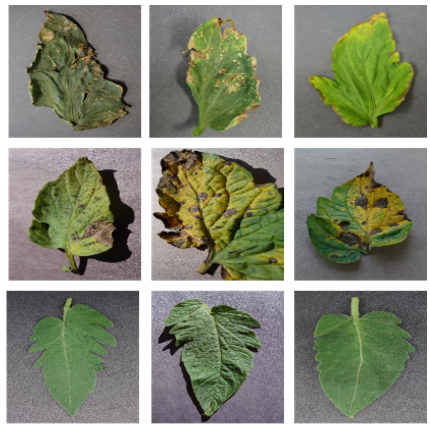
Pesticides, which are widely used today to increase yield and prevent diseases in agricultural products, have negative effects on human health and the environment. Due to these effects, efforts to restrict pesticide use gained momentum with environmental protection movements starting in the 1970s. Strict controls and licensing processes have been introduced for pesticide production to prevent their unconscious use. The aim of this study is to classify diseases observed in tomato plants, thereby preparing a scientific groundwork for reducing pesticide use. For this purpose, a dataset comprising a total of 13,883 records of tomato plants belonging to six different classes was utilized. For the classification of the data, the following Machine Learning methods were employed: Artificial Neural Network (ANN), K-Nearest Neighbor (KNN), Support Vector Machine (SVM), and Logistic Regression (LR) algorithms. Model performance was evaluated using metrics such as accuracy, precision, recall, and F1 Score, along with the confusion matrix and ROC analysis. The classification success rates obtained from model training and testing were determined as: ANN 100.0%, KNN 99.8%, SVM 99.9%, and LR 99.9%. The results indicate that all models achieved high and very similar success rates. In conclusion, it is expected that all classification models used can be successfully utilized for the reliable diagnosis of tomato plant diseases, and this capability is projected to make significant contributions to organic farming applications.
Downloads
References
[1] A. Akdoğan, Ü. Divrikli, and L. Elçi, “Importance of pesticides and their effects on ecosystem,” Akademik Gıda, vol. 10, no. 1, pp. 125–132, Mar. 2012. [Online]. Available: https://izlik.org/JA26ND97UJ
[2] O. Tiryaki, R. Canhilal, and S. Horuz, “The use of pesticides and their risks,” Erciyes Üniversitesi Fen Bilimleri Enstitüsü Fen Bilimleri Dergisi, vol. 26, no. 2, pp. 154–169, Apr. 2010. [Online]. Available: https://izlik.org/JA67XU23RC
[3] Z. Özcan and S. Tongur, “Pestisitlerin toksisitesinin Lepidium sativum test moduyla çevre ve insan sağlığı açısından değerlendirilmesi,” Ulusal Çevre Bilimleri Araştırma Dergisi, vol. 2, no. 4, pp. 144–150, 2019.
[4] Ş. E. Arıcı et al., “Isparta/Keçiborlu ilçesinde yağ gülü yetiştiriciliği, pestisit kullanımı hakkında üretici sorunları ve uygulama esasları,” Turkish Journal of Science and Engineering, vol. 4, no. 1, pp. 15–20, 2022.
[5] R. Yüzbaşıoğlu and Ş. Topkaya, “Üreticilerin tarım ilacı uygulamasındaki bilgisi ve ilaçlamada çevre duyarlılığı: Tokat ili merkez ilçe örneği,” Gaziosmanpaşa Bilimsel Araştırma Dergisi, vol. 11, no. 3, pp. 306–316, 2022.
[6] Ö. Ü. A. Polat, “Tarımda pestisitler: Dünya’da ve Türkiye’de kullanımları,” 2022.
[7] B. Özercan and R. Taşcı, “Türkiye’de pestisit kullanımının iller, bölgeler ve pestisit grupları açısından incelenmesi,” Ziraat Mühendisliği, no. 375, pp. 75–88, 2022.
[8] H. Yılmaz, A. Düzenli, and M. M. Dağ, “Dünya, Avrupa Birliği ülkeleri ve Türkiye’de pestisit kullanımı ve yasal düzenlemeler,” Türkiye Tarımsal Araştırmalar Dergisi, vol. 11, no. 3, pp. 315–330, 2024.
[9] M. Ayyıldız, “Türkiye’de kimyasal pestisit kullanımının ekonomi ve çevre yönüyle değerlendirmesi,” COMU Journal of Agriculture Faculty, vol. 10, no. 2, pp. 267–274, 2022.
[10] H. H. Tıraş, “Tarım üretiminde önde gelen ülkelerde tarımsal gübre ve ilaç kullanımının tarımsal GSYİH’ye etkisi: Panel veri analizi,” Business & Management Studies: An International Journal, vol. 12, no. 1, pp. 132–147, 2024.
[11] F. N. Doğan and M. E. Karpuzcu, “En iyi yönetim uygulamalarının pestisit kirliliğinin kontrolünde kullanımı,” Çevre İklim ve Sürdürülebilirlik, vol. 24, no. 1, pp. 25–32, 2023.
[12] M. Aydoğan and M. Baran, “Tütün yetiştiriciliğinde tarım ilaçları kullanımı ve üreticilerin zirai mücadele bilinç düzeylerinin belirlenmesi: Çelikhan tütünü örneği, Türkiye,” Türkiye Tarımsal Araştırmalar Dergisi, vol. 10, no. 2, pp. 180–190, 2023.
[13] S. Hayran, A. D. Çelik, and A. Gül, “Türkiye’de sera çiftçilerinin pestisit kullanımı ve risk algılamaları: Mersin ili örneği,” Tarım Ekonomisi Dergisi, vol. 28, no. 1, pp. 31–39, 2022.
[14] H. G. Doğan and H. Karaaslan, “Türkiye’de tarım sektörü kaynaklı çevre tahribatını önleme politikaları kapsamında destekleme alan üreticilerin incelenmesi (Seyfe Gölü yöresi hububat üreticileri örneği),” Turkish Journal of Agriculture-Food Science and Technology, vol. 10, no. 11, pp. 2213–2223, 2022.
[15] M. Tözün and G. Akar, “Türkiye’de gıda numunelerinde pestisit kalıntıları üzerine 2010 yılı sonrası ulusal literatürün incelenmesi,” Eskişehir Türk Dünyası Uygulama ve Araştırma Merkezi Halk Sağlığı Dergisi, vol. 7, no. 1, pp. 177–191, 2022.
[16] O. Gedikli, A. Uzundumlu, and G. Tozlu, “Çeltik, mısır ve buğday üretiminde tarımsal ilaç kullanımının çevresel duyarlılık yönünden incelenmesi: Samsun ili örneği,” TÜBAV Bilim Dergisi, vol. 8, no. 2, pp. 19–26, 2015.
[17] D. Hughes and M. Salathé, “An open access repository of images on plant health to enable the development of mobile disease diagnostics,” arXiv preprint arXiv:1511.08060, 2015.
[18] F. A. Esen and A. Onan, “Derin öğrenme yöntemleri ile bitki yaprakları üzerindeki hastalıkların sınıflandırılması,” Avrupa Bilim ve Teknoloji Dergisi, no. 40, pp. 151–155, 2022.
[19] S. Gökalp and İ. Aydın, “Farklı derin sinir ağı modellerinin duygu tanımadaki performanslarının karşılaştırılması,” Muş Alparslan Üniversitesi Mühendislik Mimarlık Fakültesi Dergisi, vol. 2, no. 1, pp. 35–43, 2021.
[20] Y. S. Taspinar, “Machine learning-driven e-nose-based diabetes detection: Sensor selection and feature reduction study,” Sensors, vol. 25, no. 21, p. 6607, 2025.
[21] B. Bahçıvan and A. Yılmaz, “Demografik özelliklerin çevrimiçi market alışverişi kullanımına etkisinin makine öğrenmesi yöntemleri ile tahmini,” Konya Journal of Engineering Sciences, vol. 11, no. 4, pp. 942–957, 2023.
Downloads
Published
Issue
Section
License
Copyright (c) 2026 International Journal of Applied Methods in Electronics and Computers

This work is licensed under a Creative Commons Attribution-ShareAlike 4.0 International License.